By MWM Custom / Design journal
A completed motorcycle compresses many different decisions into one object. The viewer sees a surface, a junction, a curve, or a reflection. Behind each sits a question about how the form should be made and how it should relate to the rest of the vehicle. Craftsmanship gives those decisions a physical expression.
For MWM, digital development and hands-on work belong to the same process. A model can make a shape understandable before it exists; material introduces its own behaviour when that shape is made. Working between the two allows an idea to change through observation rather than remaining fixed at the first rendering.
The edge tells a story.
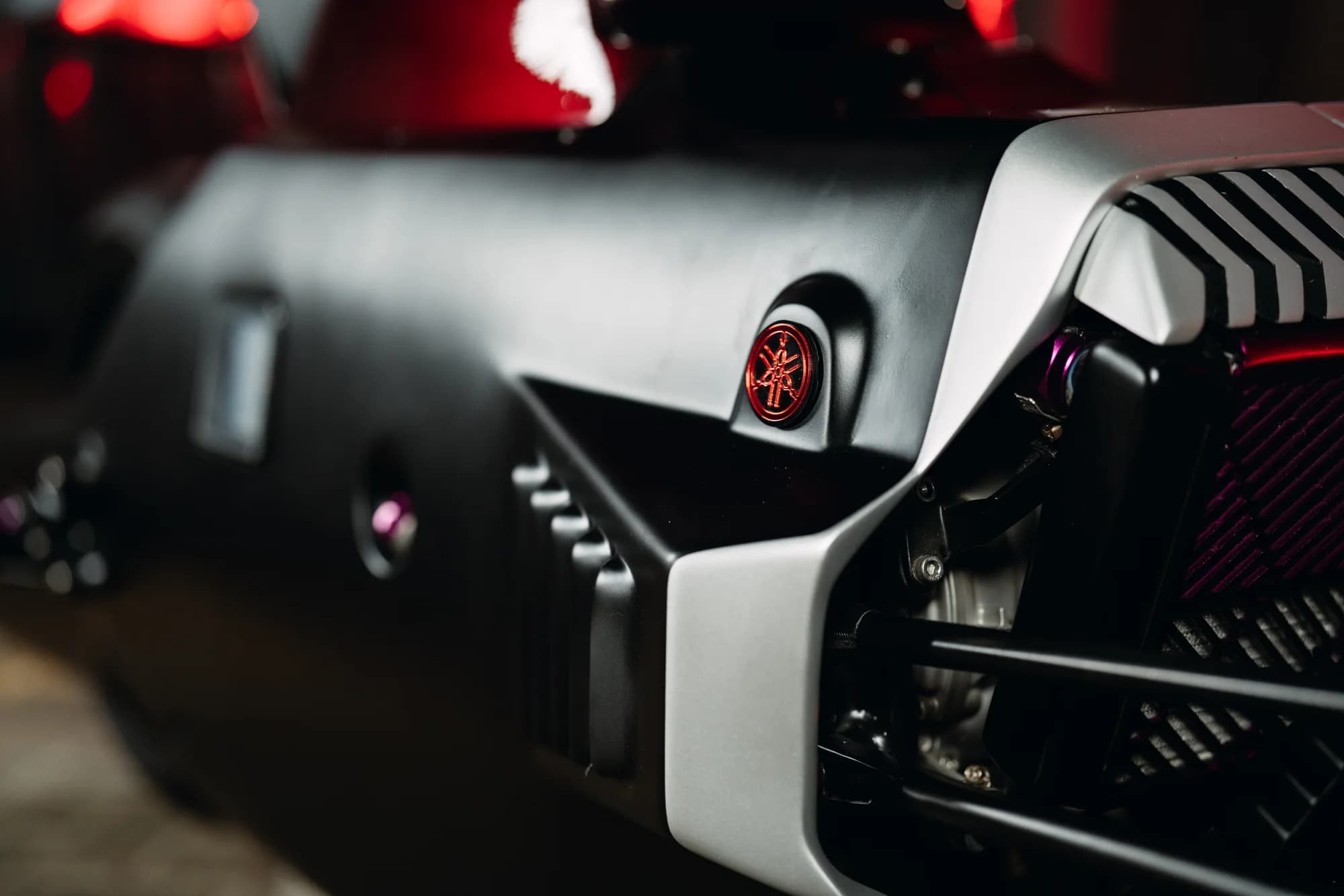
Look at the bodywork detail on Xtreme Max V1. A light surface turns against a darker area, and a defined edge separates the two. At this scale, the relationship between adjacent finishes becomes as important as the larger silhouette. A change in reflection makes the shape easier to understand.
Such details invite a different pace of looking. Instead of asking only what the motorcycle resembles, the viewer begins to notice how its visual transitions are resolved. The edge becomes a meeting point between the idea of the surface and the physical object.
A physical conversation.
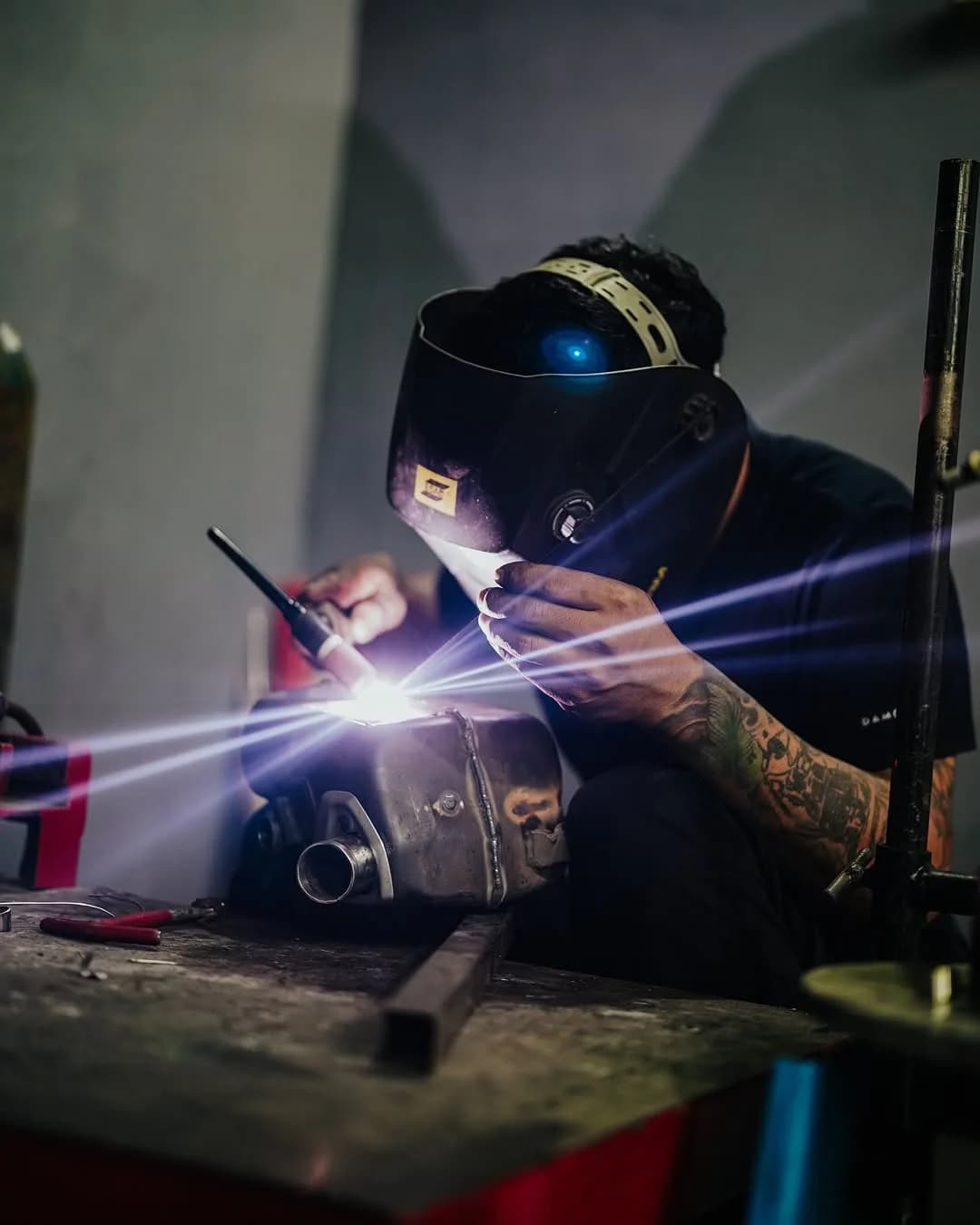
Workshop photography places the finished object in a wider context. A person working close to an assembly, a tool held at a particular angle, and a concentrated area of light reveal a scale of attention that a complete motorcycle photograph cannot show.
These moments matter because making is an active part of development. A physical piece can reveal an awkward transition, an access constraint, or a proportion that needs another look. The process gains value from recognising those questions and bringing them back into the design conversation.
Let the detail belong.
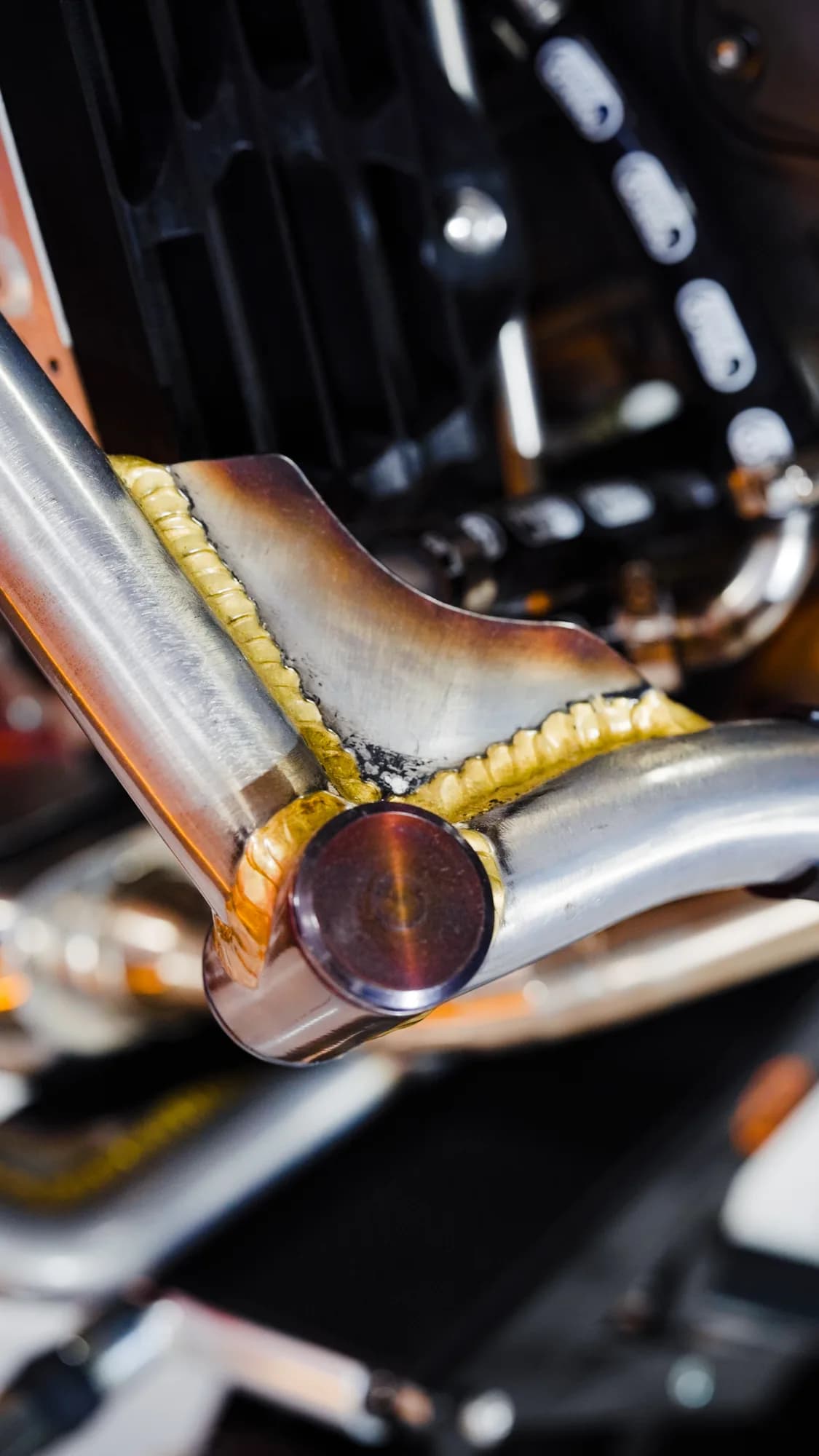
Badpod offers a particularly direct relationship between detail and overall character. Its pipework and junctions remain visible within an open composition. The small forms are not hidden behind a broad exterior; they help create the appearance of the motorcycle itself.
Material honesty begins with attention to what can actually be seen and understood. A photograph can reveal texture, reflection, and the shape of a junction. Identifying an alloy or explaining a fabrication method requires additional information. Respecting that distinction lets the visual evidence speak clearly, while leaving room for the deeper technical story.